AQUADEANatur
Nozzles for crop protection, foliar feeding and plant strengthening

Better coverage, without changing how you spray.

You swap the nozzles on the boom and nothing else. Your sprayer, your products and your way of working stay exactly as you know them. The difference shows on water-sensitive paper: finer droplets, spread more densely and evenly across the surface.

Compare the coverage Request a data sheet

Aquadea GmbH, Schloss Sulzemoos. Developed and manufactured in Bavaria.

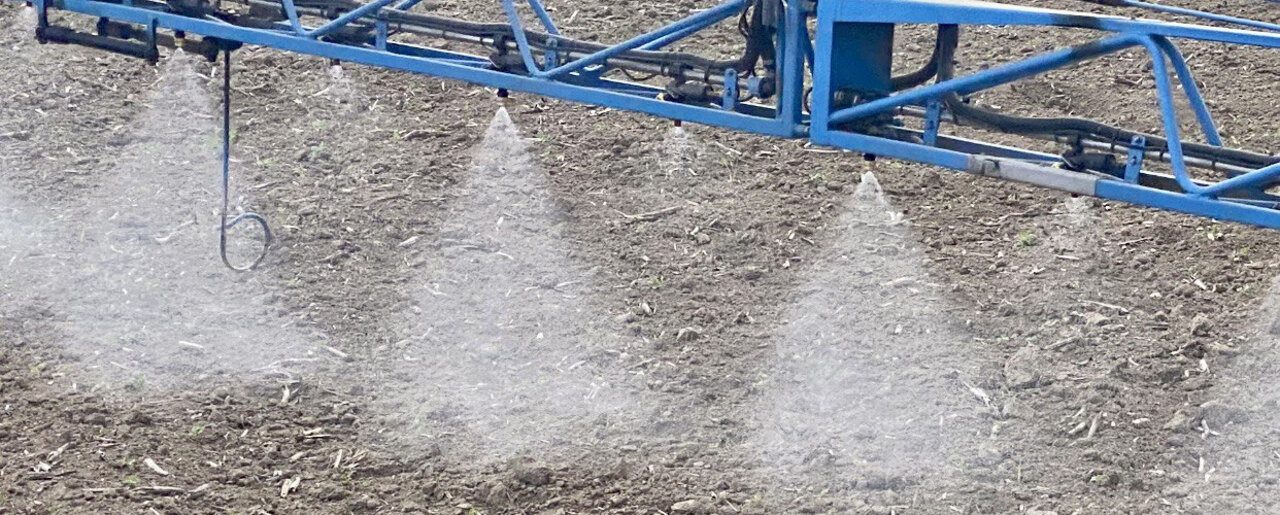
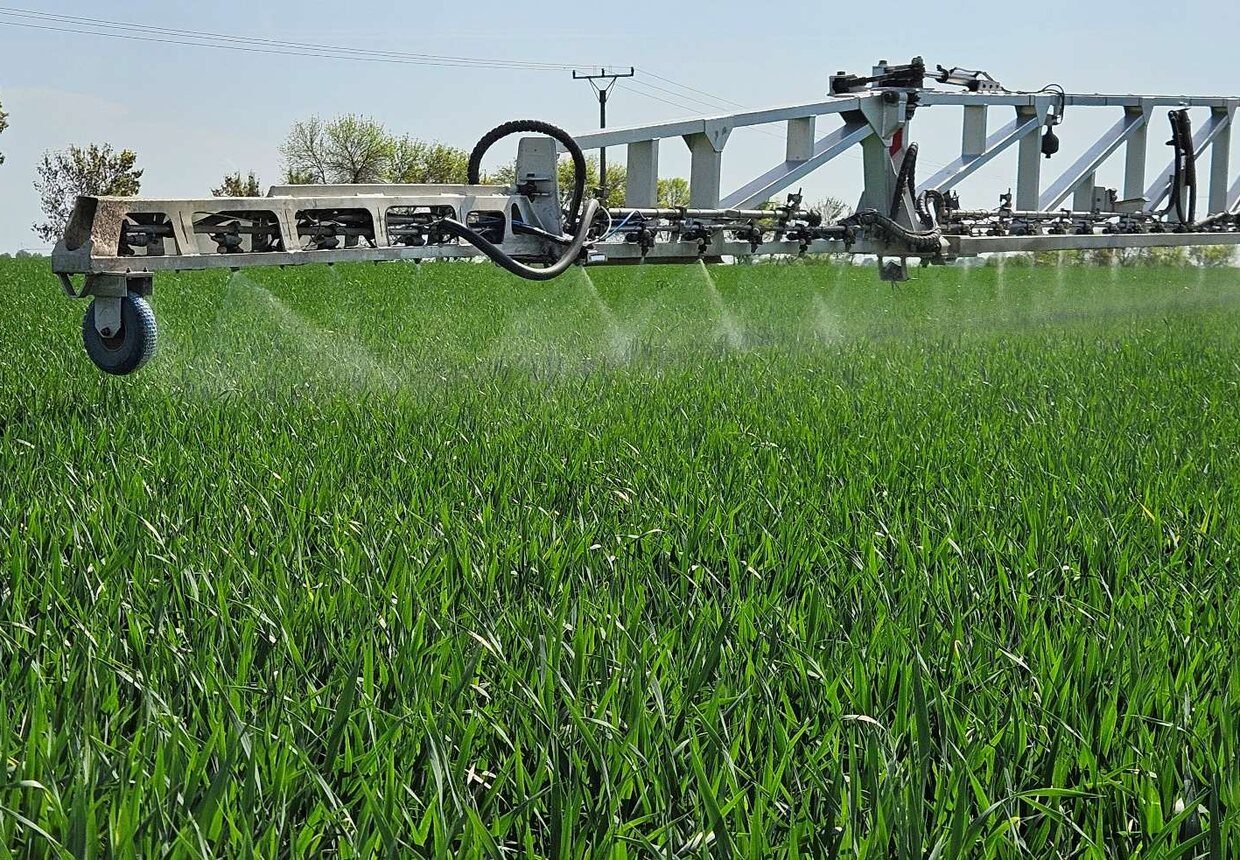
Spray boom at work over green cereals, with spray fans visible
Titanium and rubyNozzle materials
1.0 to 30 barPressure range
04 and 08Nozzle sizes
60° and 80°Spray angles

What the nozzle does for you

Four points that matter in day-to-day operation. The technology behind them is explained further down, where those who wish to check the figures will find the measured values.

More leaf area covered

In the same trial, at the same application rate, the deposit lies more densely and evenly on the paper. This also holds for leaves that are difficult to wet, such as brome.

No conversion, no extra equipment

The nozzles fit the usual nozzle bodies. There is no pump, no device in the tank, no new controls and nothing that can break down on you during the season.

Compatible with your products

The nozzle works physically, not chemically. Crop protection products, foliar fertilisers and biological preparations are applied as before, and microorganisms do not pass through any device in the tank.

Built for a long service life

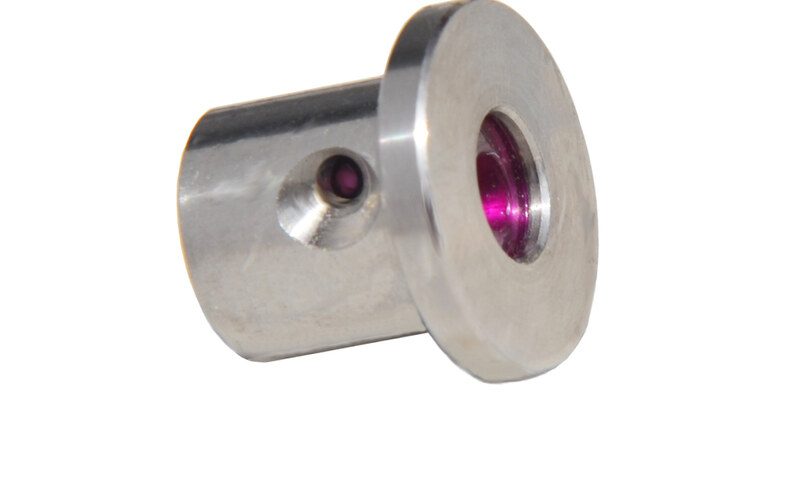
A titanium body, a ruby outlet and no plastic in the flow path. The working range of 1.0 to 30 bar leaves you free to choose your forward speed.

Coverage compared

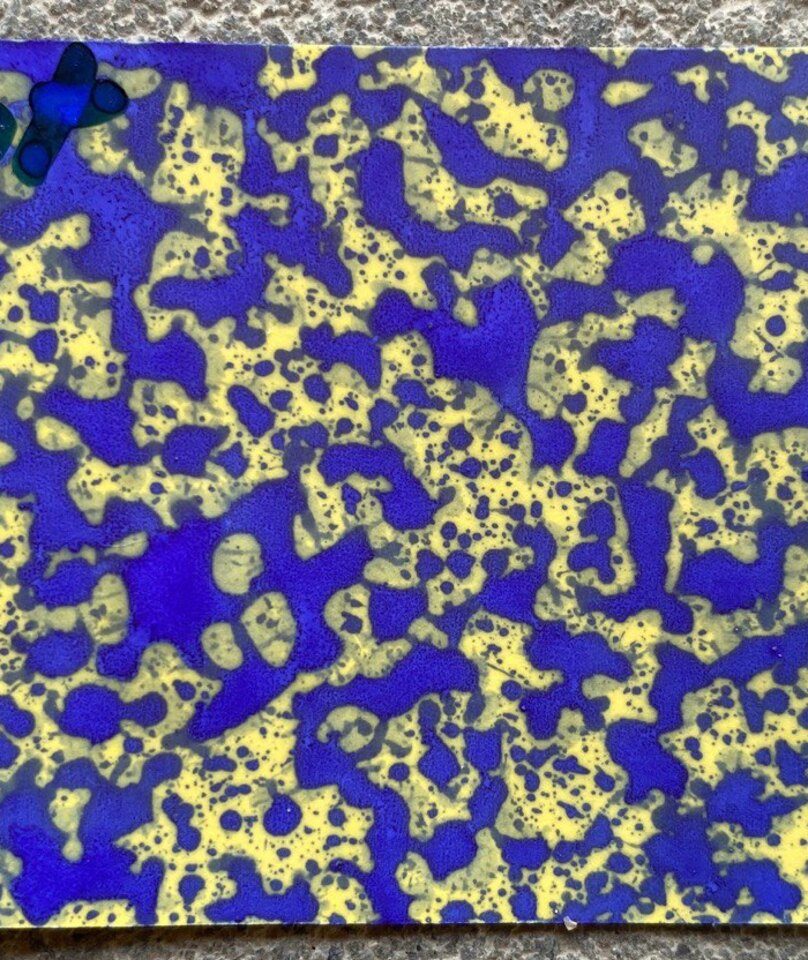
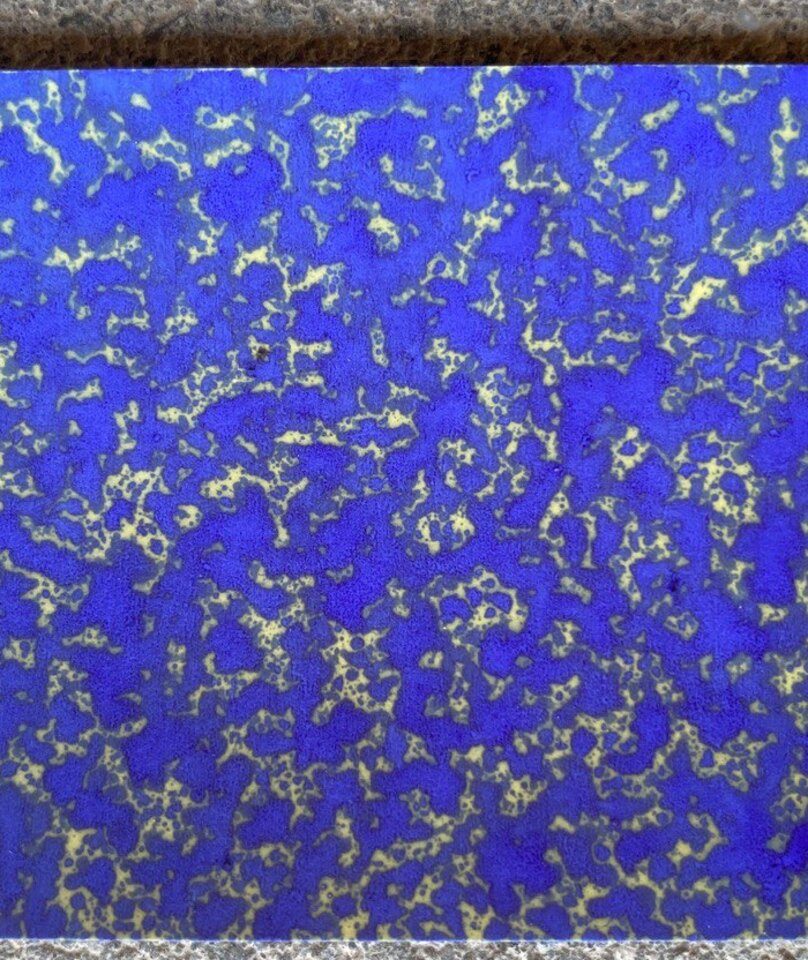
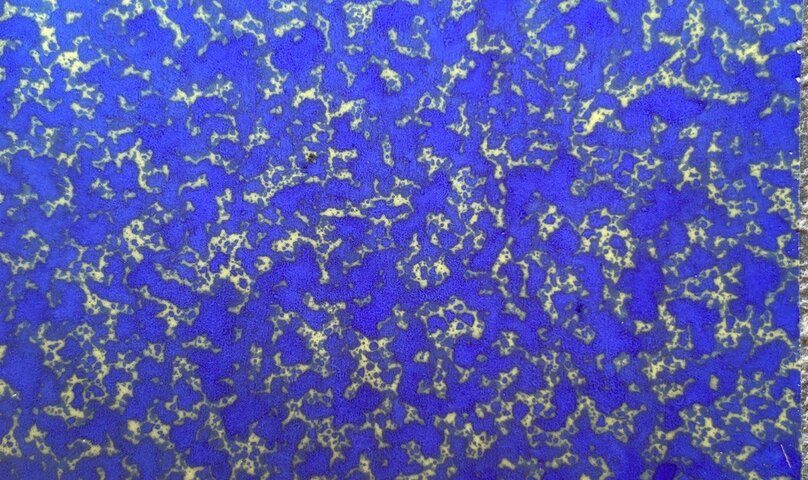
Water-sensitive paper turns blue wherever a droplet lands. Both strips come from the same trial, at the same forward speed and the same application rate.

Coverage pattern of an air-induction nozzle
Air-induction nozzle
Coverage pattern of the Aquadea CERES VT04
Aquadea CERES VT04

Images from the comparative trial carried out by Aquadea GmbH. The strips show the distribution of the droplets, not the efficacy of any product.

What this means for application

A finer spray pattern is not an end in itself. Here are four consequences that can be explained physically, each shown with the current state of the data.

Larger deposit area per litre of spray liquid

For the same volume, a finer droplet spectrum covers more leaf area. What stays on the leaf can be taken up; what runs off or falls between the rows cannot.

Visible on water-sensitive paper

Less run-off on waxy leaves

Ultrafine bubbles attach to water-repellent surfaces and lower the wetting energy. On grasses and brassicas, this decides whether a droplet adheres or runs off.

Demonstrated in the laboratory, field studies under way

More stable droplets between nozzle and leaf

The measured zeta potential of −28 mV keeps like-charged droplets apart. They coalesce less and retain their size distribution. This expressly does not mean a recognised drift reduction according to the JKI (Julius Kühn Institute, the German federal research centre for cultivated plants); please see the notice further down.

Plausible in terms of colloid chemistry, agricultural studies under way

Biological preparations are not put under strain

The bubbles only form as the liquid leaves the nozzle. Microorganisms do not pass through any device in the tank, and at the target the like charge counteracts their adsorption onto soil particles.

Plausible, field evidence still pending

What we do not claim

We do not promise you higher efficacy of approved plant protection products, nor a reduced application rate. Such a statement requires repeated field trials. Until these are available, we show the physical route towards it and the observations from farms for what they are.

Please adhere to the approved application rate and to the product label.

With foliar fertilisers and plant strengtheners, such as rock dust or EM (effective microorganisms), users report an enhanced effect. These are reports from practice, not trial results.

Observations from farms
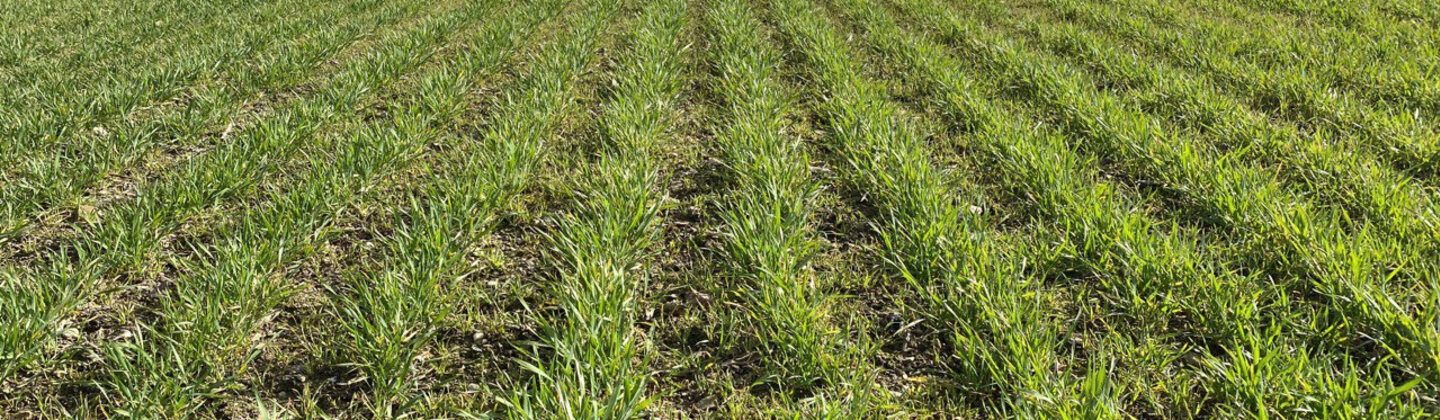
Winter cereals in rows, wide horizon

Where the difference comes from

Three processes in the nozzle head, all within the last few centimetres before the plant. If you would like to know more, you will find the measured values and an assessment of the evidence below.

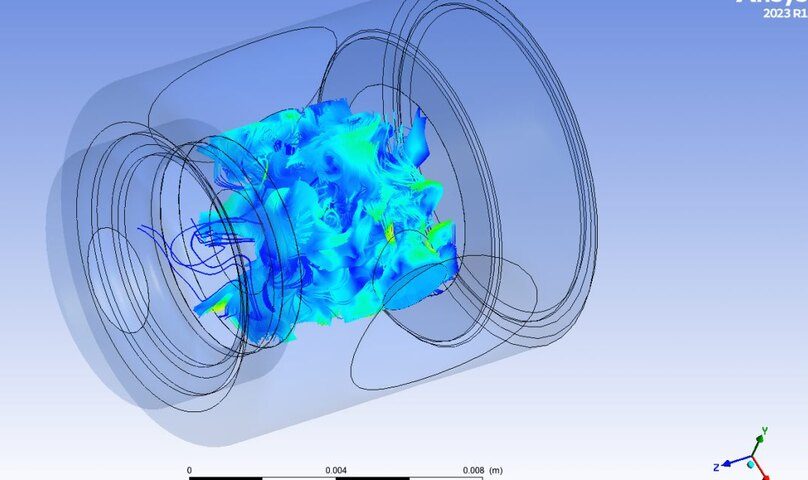
Flow simulation of the swirl chamber 01

Swirl chamber

The water is set in rotation inside the chamber. This creates very fine micro- and nano-vortices before it reaches the outlet.

Ruby insert in the titanium body 02

Implosion and air intake

At the reversal point of the nozzle, the pressure drops locally. The chamber draws ambient air into the water stream according to the Venturi principle.

Coverage pattern on water-sensitive paper 03

Ultrafine bubbles

The shear forces in the channel break the air up into bubbles smaller than one micrometre. They reach the leaf fresh and in full number.

Measured values

The figures behind the spray pattern

Measured in the emerging liquid using nanoparticle tracking analysis. In colloid chemistry, a zeta potential beyond 20 to 30 millivolts is considered electrostatically stable, which means the bubbles repel one another instead of coalescing.

12.2 millionultrafine bubbles per millilitre of spray water
−28 mVzeta potential of the bubbles, electrostatically stable
100–200 nmtypical bubble size, below one micrometre
Weeksis how long such bubbles remain in suspension; they do not rise
Spray boom at work, several nozzles spraying over the ground

Nanoparticle tracking analysis of two samples dated 18 May and 1 June 2026: 12.2 and 12.1 million bubbles per millilitre. Depending on water quality, the measured zeta potential lies between −25 and −30 mV; hard water with a high calcium and magnesium content shifts the value towards zero. The figures refer to the samples tested and do not constitute a guaranteed property.

Why in the nozzle rather than in the tank

Systems that generate bubbles in the tank have existed for years. The difference lies in where the bubbles are formed, and this has four practical consequences.

No extra equipment

The nozzle generates the bubbles during normal application. Nothing changes in your routine on the farm.

Fresh at the target

Only seconds pass between formation and the leaf. Ageing and coalescence in the tank do not occur.

The tank mix stays untouched

Formulation adjuvants, pH buffers and biological preparations do not encounter an upstream generator.

Independent of the product

The air shearing works physically, not chemically. It can be combined with common spray products.

CERES VT04 and CERES VT08

For crop protection, plant strengthening and foliar feeding in arable farming and in land and amenity maintenance. Both sizes fit the usual nozzle bodies.

CERES nozzle, cut-out image: titanium body with black holder

CERES VT04

Nozzle sizeequivalent to 04
Spray angle60°
Flow rate at 3 bar1.66 l/min
Droplet sizevery fine
View application chart
CERES nozzle, cut-out image: titanium body with black holder

CERES VT08

Nozzle sizeequivalent to 08
Spray angle80°
Flow rate at 3 bar3.25 l/min
Droplet sizevery fine
View application chart
Research

What has been demonstrated, and what has not yet

We distinguish between measured values, laboratory findings and mechanisms that are physically plausible but have not yet been tested for arable farming in published field studies.

MechanismWhat lies behind itState of the data
Better wetting of the leaf surfaceBubbles accumulate at the interface with water-repellent surfaces and lower the wetting energy.Demonstrated in the laboratory, field work under way
More stable droplets in flightLike-charged droplets coalesce less and retain their size distribution better.plausible in terms of colloid chemistry
Finer dispersion of EC and SC formulationsThe shear forces in the chamber break up the active ingredient phase, similar to a high-pressure homogeniser.Analogy, agricultural studies lacking
Protection of biological preparationsMicroorganisms do not pass through a generator in the tank; at the soil, the like charge has a repelling effect.plausible, field evidence outstanding
Oxygen input during irrigationThe greatly enlarged interface increases the transfer of oxygen into the water.well documented in hydroponics
Research paper as PDF
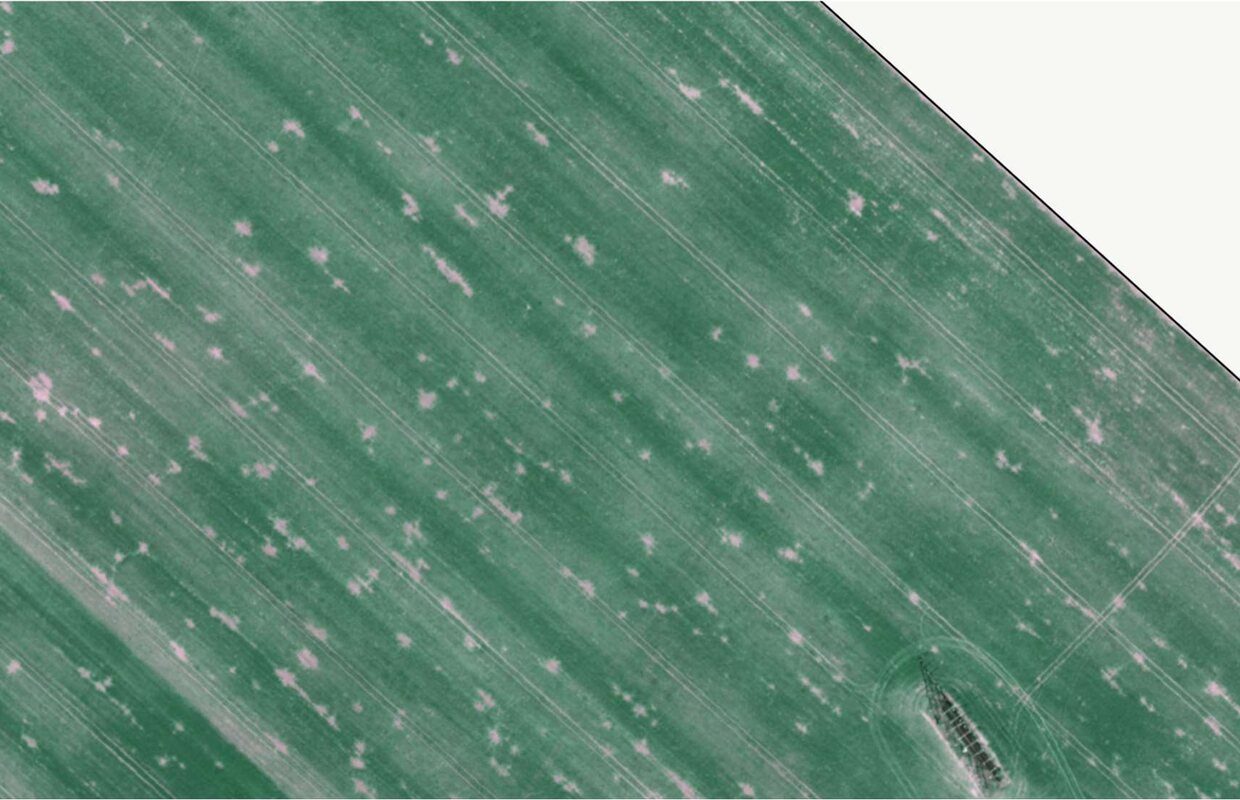
Drone image of a cereal crop with visible spray tracks
Drone image of the crop; the strips follow the sprayer passes.
From the field

A farm in Slovakia saw it from the drone

Five nozzles were fitted on one side of a sprayer with a 36-metre working width. During a pass in lentils, the farm manager noticed that the crop on that side was developing differently. The passes concerned became visible in the drone’s multispectral images and later also in the combine harvester’s yield map.

This is an observation from a working farm, not a randomised replicated trial. The plots were not laid out with replications, and differences between sites cannot be ruled out. We are providing the images because they are the reason for our ongoing trials.

Request the full evaluation

Mandatory notice on drift reduction

CERES nozzles do not have a recognised drift reduction class according to the JKI. They must not be used where plant protection law or the product label requires drift-reducing equipment approved by the JKI, in particular under the conditions NW605 to NW609, under NT conditions, and in areas protecting water bodies and nature. For these applications, only listed nozzles with the corresponding reduction class are permitted.

Talk to us about your farm

We look at your spraying equipment, your water quality and your crops, and tell you which nozzle size is suitable and where the technology reaches its limits.

We use your details solely to respond to this enquiry. Information on data processing can be found in the privacy policy.

Legal information

Legal notice (Impressum)

This is a translation for your convenience; only the German version is legally binding.

Information pursuant to § 5 of the German Digital Services Act (Digitale-Dienste-Gesetz, DDG)

Aquadea GmbH
Hirschbergstraße 14
85254 Sulzemoos

Represented by the managing director Werner Habermeier
Register court: Amtsgericht München (Munich Local Court), HRB 187945
VAT identification number pursuant to § 27a UStG: DE274152353

Phone: +49 8135 99 474 55
E-mail: info@aquadea-natur.de

Responsible for the content pursuant to § 18 Abs. 2 MStV: Werner Habermeier, address as above.

aquadea-natur is a brand of Aquadea GmbH and not a separate company.

Consumer dispute resolution

We are neither obliged nor willing to take part in dispute resolution proceedings before a consumer arbitration board (§ 36 VSBG).

Privacy policy

Controller

Aquadea GmbH, Hirschbergstraße 14, 85254 Sulzemoos, phone +49 8135 99 474 55, info@aquadea-natur.de, represented by Werner Habermeier.

Accessing the website and server logs

When you access this page, our hosting provider (data centre in Frankfurt am Main) stores technically necessary access data: IP address, date and time, page accessed, amount of data transferred, browser type and operating system. The legal basis is Art. 6(1)(f) GDPR, our legitimate interest in secure and trouble-free operation. The logs are deleted after two months at the latest. We have concluded a data processing agreement with the provider.

Contacting us

If you contact us via the form, by e-mail or by telephone, we process your details in order to answer your enquiry. The legal basis is Art. 6(1)(b) GDPR for contract-related enquiries, and Art. 6(1)(f) GDPR otherwise. We delete the data as soon as the enquiry has been fully dealt with, provided that no statutory retention periods apply.

Cookies

This website does not set any cookies and does not use any analytics, advertising or consent services.

Recipients and third countries

Data is only passed on to service providers acting as processors on our behalf. No data is transferred to third countries.

Your rights

  • Access, rectification, erasure and restriction of processing
  • Data portability
  • Objection to processing based on Art. 6(1)(f) GDPR
  • Withdrawal of consent given, with effect for the future
  • Complaint to a supervisory authority, which in our case is the Bayerisches Landesamt für Datenschutzaufsicht (Bavarian Data Protection Authority) in Ansbach

No automated decision-making, including profiling, takes place.
Terms of use and liability

Product information

The information on this page is product information and does not constitute a guarantee of properties. Measured values refer to the samples tested and may vary depending on water quality, pressure and operating conditions.

Limits of use

The nozzles described do not have a recognised drift reduction class according to the JKI. They must not be used where plant protection law or the product label requires approved drift-reducing equipment. The user is responsible for complying with the authorisation and application requirements and with the application rates.

Use plant protection products safely. Always read the label and product information before use.

Field reports

The observations from farms that we present are individual cases, not trial results. They were not collected under replicated, randomised conditions and cannot be generalised.

External links

The operators of linked third-party sites are responsible for their content. No legal violations were apparent at the time the links were set; ongoing monitoring does not take place without concrete indications.

Notice on AI systems and image credits

AI systems

No AI system that interacts with visitors is currently in use on this website. Texts, graphics and evaluations are produced editorially, in part with the help of AI-supported tools. Aquadea GmbH bears responsibility for the content. Should a dialogue system be used in future, we will label it as such, as required by Art. 50 of the AI Act.

Image credits

Photographs and graphics: Aquadea GmbH, unless stated otherwise. Drone image in the section “From the field”: a farm in Slovakia, by kind permission.